Showing posts with label Washington. Show all posts

Sunday, August 3, 2014

Washington Rural Heritage Collections

Washington Rural HeritageThe Washington Rural Heritage project provides access to images and documents that capture the culture, industry, and community life of Washington State. The collection is an ongoing project of small, rural libraries and partnering cultural institutions, guided by an initiative of the Washington State Library.

Here are several photos from the collection:

The town pumpTwo women stand at the public water pump in Langley during the 1920s. The pump served both people and horses, and was a popular meeting place for the community.

Horse drawn rail cart on Whidbey IslandLogging was widespread on Whidbey Island in the 19th century. Here, a horse drawn rail cart pulls timber at the Calligan Logging Camp in 1887.

Dorothy Looney, trick riderDorothy Looney, born in Kittitas County in 1927, developed a love of horses and riding early in her life. During the 1940s, she became one of best female trick riders in the Northwest.

ornamental_line
Lorin Catudio 
Redmond Library Board, Emeritus

Wednesday, May 15, 2013

And The Award Goes To…

Extra special congratulations to our neighbor, the Pierce County Library System, for their receipt of a 2013 National Medal for Museum and Library Service. Pierce County Library is the first library in the State of Washington to earn this award.

National Medal for Museum and Library Service

The National Medal for Museum and Library Service honors outstanding institutions that make significant and exceptional contributions to their communities. Selected institutions demonstrate extraordinary and innovative approaches to public service, exceeding the expected levels of community outreach. The National Medal is the highest honor for museums and libraries.

In a White House Ceremony on May 8, First Lady Michelle Obama (as always, looking fabulous) joined Director Susan Hildreth and the Institute of Museum and Library Services to honor ten institutions from across the country. In addition to Pierce County Library leaders, a member of the community participated in the ceremony to highlight how the library affected their life.

See video of the ceremony, read the press release, or find more information at the Pierce County Library System website.

Hooray for libraries in Washington state!

Jaime

Monday, March 12, 2012

There’s Gold on Your Bookshelves!

The Immigrant In 1887 by John W. NordstromWhile doing my spring cleaning, I came across a thin book that I’d forgotten about. I quickly read the book and was fascinated by the first-hand account of the Klondike Gold Rush. The book, The Immigrant in 1887, is the autobiography of Swedish immigrant John W. Nordstrom, the founder of the Nordstrom retail empire.

In 1887, Nordstrom, only 16 years of age, left his family’s farm in Sweden and headed to America to find his fortune. Arriving in America with $5 to his name, he worked his way across the country taking jobs on railways and in mines, lumber camps and shipyards, eventually arriving in Seattle, Washington in 1896.

Gold! Gold! Gold! Gold! - The Seattle Post-IntelligencerWhile working at a sawmill he read an 1897 newspaper account of the discovery of gold in the Klondike and headed to Alaska to make his fortune. He invested in a gold claim and was one of the lucky ones he returned to Seattle with a modest fortune of $13,000. From then on, he focused on the less demanding business of retailing.

Klondike Gold Rush
The news of gold in the Klondike triggered a stampede of would-be prospectors to the gold creeks. Some 100,000 people attempted to find their fortunes few did. The steamship Portland arriving in SeattleSeattle and San Francisco were the most common departure points for reaching the gold fields by sea. Nordstrom recounts his Alaska cruise:

The steamship company was selling first- and second-class tickets on this boat. A reporter from the Post-Intelligencer boarded the ship not long before it was to sail and inquired what the difference was between first- and second-class passage. He was told that as far as anyone could see, the only difference was that the first-class passengers slept with the horses and the second-class passengers slept with the mules. Since we had second-class passage, we slept with the mules.

Once in the Alaskan town of Skagway, prospectors faced the arduous challenge of bringing all their supplies up White Pass and down the Yukon River to the gold fields, a trip of about 500 miles over forbidding terrain.

On the way up to White Pass

To learn more, visit the Klondike Gold Rush National Historical Site in downtown Seattle. Several exhibits highlight the gold rush era, and admission is free.

Modern Day Prospecting
Panning for goldIf you’re interested in prospecting for gold in Washington state waters, visit the Department of Fish & Wildlife. There, you’ll find a link to a comprehensive publication that covers terminology, techniques, and allowable prospecting sites within the state: Gold and Fish: Rules for Mineral Prospecting and Placer Mining.


Redmond Library Board

Sunday, August 14, 2011

The Enduring Literary Legacy: Carnegie Libraries in Washington State

On several recent trips around Washington state, I stopped by Sound Bend and Port Townsend. I was surprised to discover that both these towns have original Carnegie libraries still in use. In fact, the South Bend library, which is now part of the Timberland Regional Library system, has functioned continuously as a library for over 100 years.

South Bend Library, Pacific County WA

These libraries are a legacy of Andrew Carnegie, a Scottish-born American industrialist and philanthropist. Andrew Carnegie At the end of the nineteenth century, Carnegie had become the richest man in the world, amassing a $500-million fortune (worth about $200 billion in today’s dollars).

In 1901, he sold his Carnegie Steel Company and retired. However, he decided to use his wealth for the public good. He donated about $350 million to several causes, including the endowment of over 2,500 libraries worldwide. Of these libraries, 44 were funded and built in Washington State between 1901 and 1916.

Nearly all of Carnegie's libraries were built according to "The Carnegie Formula", which required applicants to:

  • Demonstrate the need for a public library
  • Provide the building site
  • Provide partial support for its operation
  • Provide free service to all

Carnegie Libraries in Washington
The first Carnegie library grants were approved for several Seattle area libraries. A $430,000 grant was given for the construction of the original Seattle Central Library, which was razed in 1957.

Seattle Central Library (1919 photo)Of the 44 Carnegie libraries built in Washington (see list), 33 still stand. Of those, 14 still serve their original purpose.

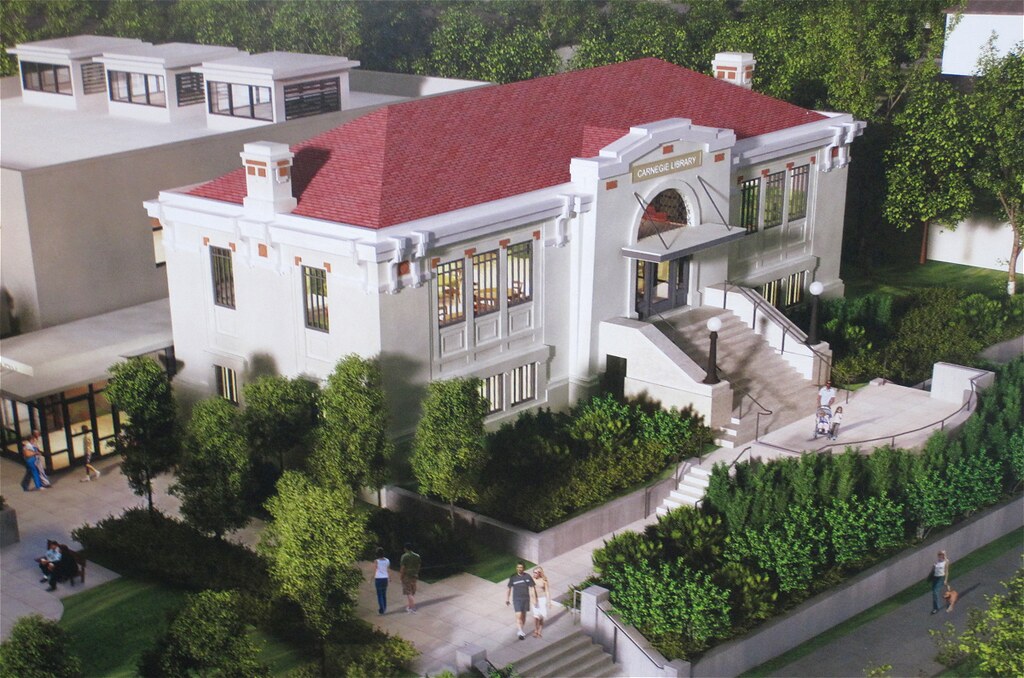
As many of these existing libraries enter their second century of service to their communities, they’ll need to be expanded and modernized. Port Townsend is launching a capital campaign to expand and upgrade the historic Port Townsend Public Library, which would double the library’s existing square footage. Here’s an architectural rendering of the project.

Port Townsend Library expansion 
Expansions for historic buildings, such as Carnegie libraries, typically preserve the architectural heritage of the building. In 2004, the Carnegie-funded Columbia Branch of the Seattle Public Library was expanded to twice its original size. The new portion of the building extends from the back of the original structure, maintaining the building’s original street presence.

Columbia Branch Library entrance

Grand Tour
The Carnegie Library Consortium of Washington is an Grand Tour Guide organization whose mission is to raise awareness of the Carnegie libraries in Washington state and to preserve them for future generations. In 2009, this organization sponsored the Mr. Carnegie’s Grand Tour of Washington a driving tour of the remaining 33 Carnegie library buildings in Washington. The Grand Tour Guide provides useful info on visiting these historical sites.

So with 2 libraries visited, I have only 31 more to go!

Redmond Library Board

Tuesday, June 7, 2011

Keeping an Eye on the Past: The Washington State Library Photograph Collection

Washington state seal The Washington State Archives recently revamped its online Digital Archives. The archives is dedicated to preserving electronic records from both state and local agencies that have legal, fiscal, or historic value.

The archives also includes the State Library Photograph Collection, which contains 5,274 images of various subjects related to Washington's history, people, geography, and economic development, from 1851-1990. Here’s one of a Boeing 314 Clipper flying past Mt. Rainier.

Boeing 314 Clipper and Mt. RainierYou can either search the photo collection by keyword, or browse the collection titles. In searching for the photos of Asahel Curtis, I came across this one taken at Neah Bay, where a whale is being cut up by whale hunters:

Cutting up a whale at Neah Bay - Asahel Curtis Asahel Curtis began his photographic career in 1897 and chronicled much of the Pacific Northwest over the next several decades.

You can also find photos of historical figures, such as Ezra Meeker, who travelled the Oregon Trail by ox cart and was the founder of Puyallup WA.

Ezra Meeker - founder of Puyallup WA

Redmond Library Board

Sunday, May 15, 2011

Hit the Road: The 2011 Washington State Travel Planner is Now Available

2011 Washington State Travel Planner The 2011 Washington State Travel Planner is available online. This 152-page, full-color publication is filled with road trips, travel planning tips, maps and photographs that will inspire your wanderlust to explore Washington State. You can also order printed copies of the travel planner here.

In addition, the state’s Experience Washington Web site provides a wealth of travel-related resources.

A Douglas County Road Trip
Last week, I traveled through Douglas County. The town of Waterville (elevation 2,650 feet) is the county seat of Douglas County, Washington. The town sits on a broad plain called the Waterville plateau. In the late 19th century, early settlers raised cattle. However, potatoes and wheat eventually became the dominant agricultural industry. Tourism is on the rise here, and the historic Waterville Hotel makes a great overnight stay.

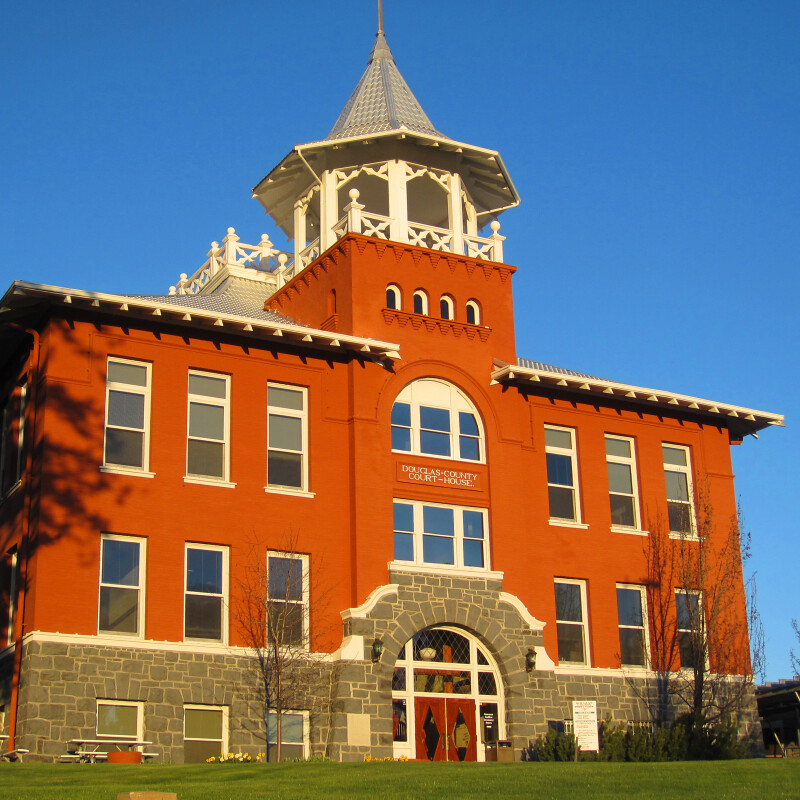
The most striking building in Waterville is the brick and stone Douglas County Courthouse, which was built in 1905.

Douglas County Courthouse (click for larger image)

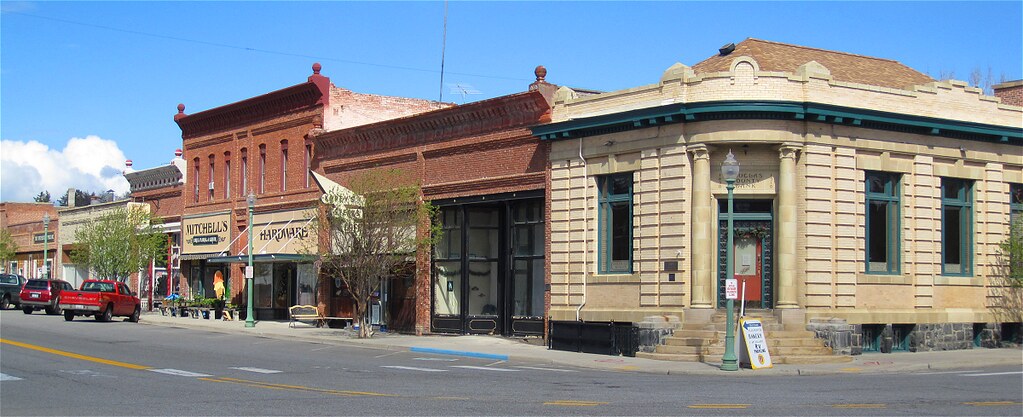
State Route 2 runs right through downtown Waterville, whose population is around 1,200. Many older building still remain on West Locust Street, which is part of Route 2.

West Locust Street (click for larger image)

The Waterville Auto Company building on East Park Street is a reminder of the town’s older days.

Waterville Auto Company (click for larger image)

You can learn about the area’s history at the Douglas County Historical Museum. The mural on the museum’s building depicts a mining scene.

Douglas County Historical Museum mural (click for larger image)

Four miles east of Waterville on Route 2 lies the tiny town of Douglas. The Douglas General Store is the community center.

Douglas General Store (click for larger image)

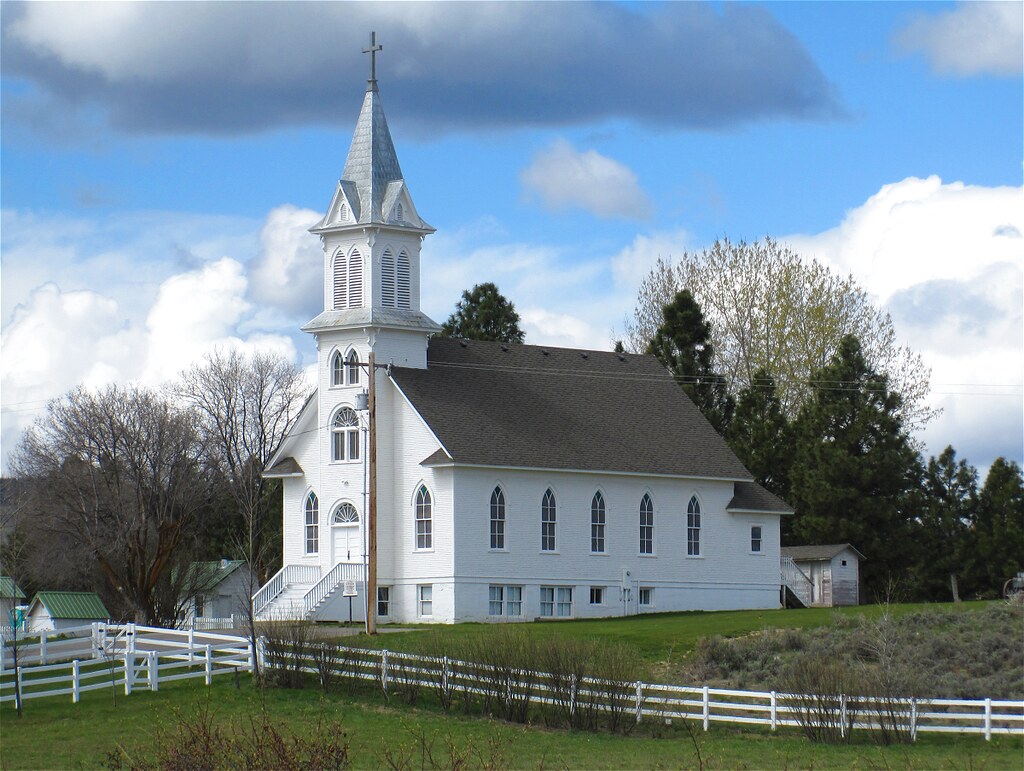
St. Paul's Lutheran Church is a prominent landmark in Douglas. Build in 1915, the church originally held services in English and German, the language of many of the early settlers in this area.

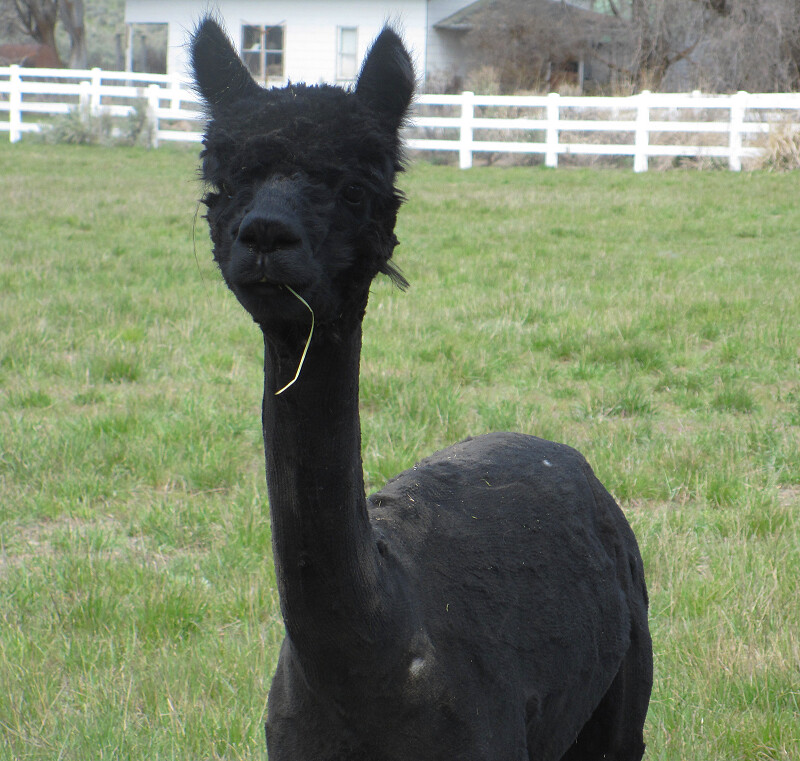
St. Paul's Lutheran Church (click for larger image)Spring is the season for shearing sheep — and the occasional alpaca.

Freshly sheared alpaca in Douglas (click for larger image)

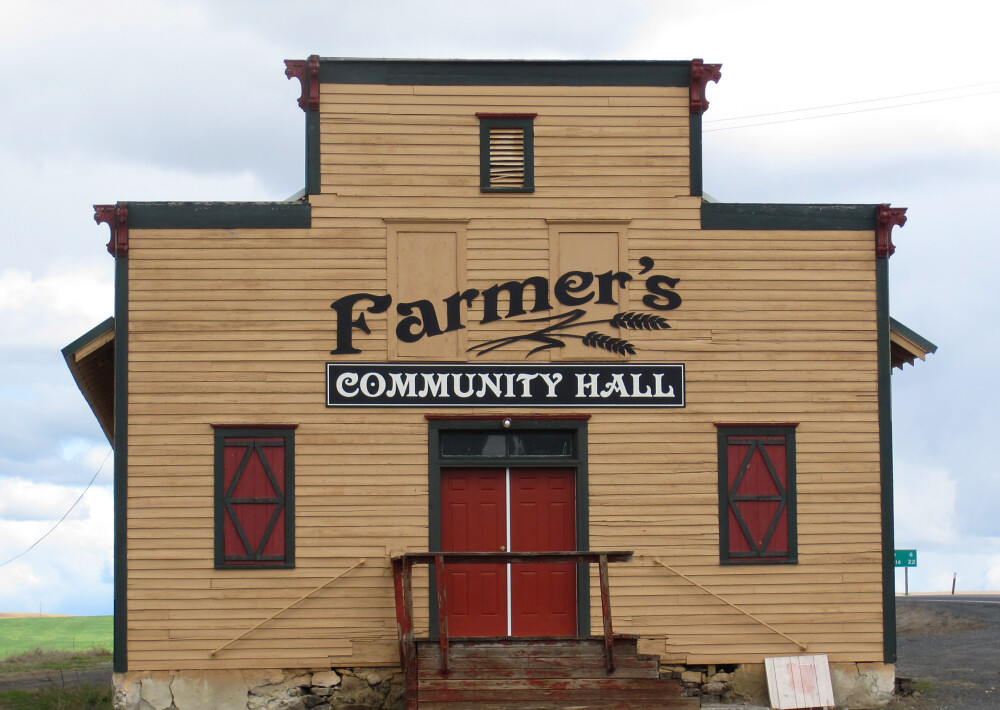
Route 2 east of Douglas passes through large tracts of farmland. The Farmer’s Community Hall is one of the few buildings along this road.

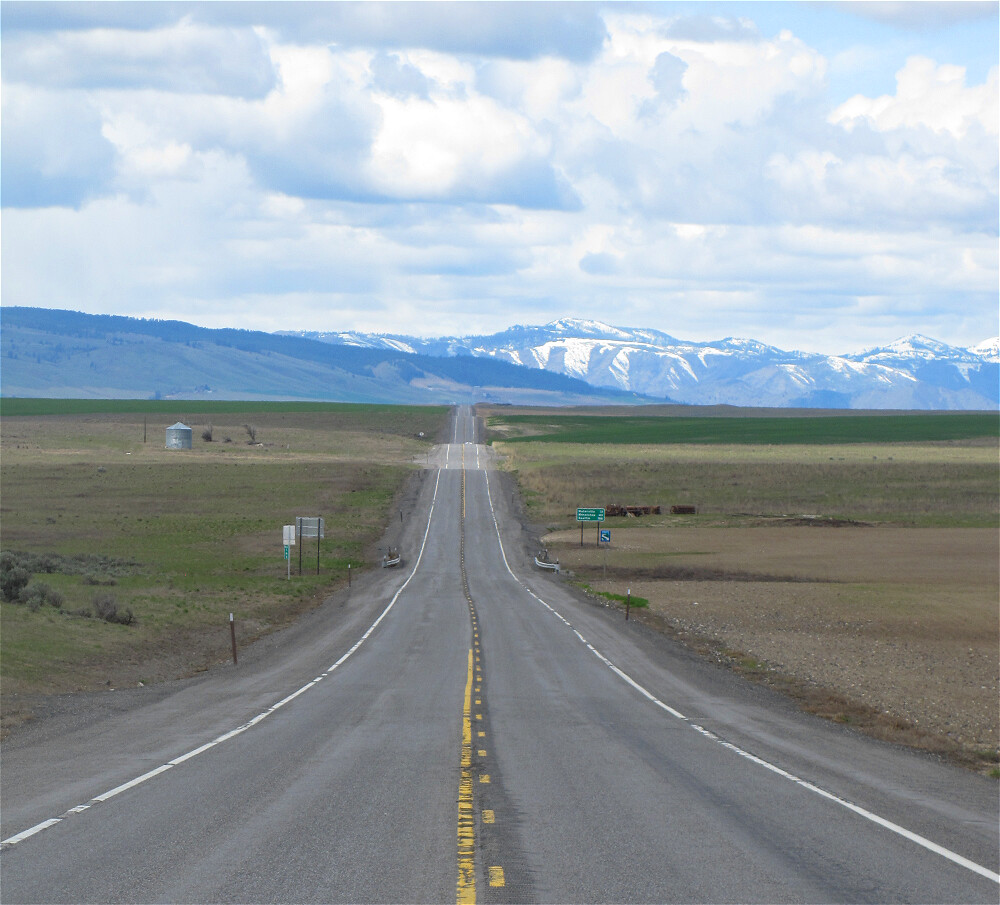
Farmers Community Hall (click for larger image) As Route 2 climbs up the plateau, the view looking west towards the Cascades is dramatic.

Route 2 and the Cascades (click for larger image)Wherever you go, enjoy your travels through Washington state!

Redmond Library Board

Saturday, December 25, 2010

Washington State by the Numbers: The 2010 Census Results

Initial 2010 Census results are now available. The Census Bureau has recently released the resident population Census 2010: WA Population Changefor the nation and states, as well as congressional apportionment totals for each state. For Washington state, the population increased 14.1% during 2000-2010.

Click on the following image to display an interactive map that provides details on each state’s population change, population density, and apportionment. 

Click to view interactive map

Beginning in February and wrapping up by March 31, 2011, the Census Bureau will release demographic data to the states on a rolling basis so state governments can start the redistricting process.

Other key Census Bureau references include:
  • Interactive Timeline  Lists census planning efforts, major milestones, and census data announcements over the next several years.
  • Multimedia Center  Features video, photo, and audio showcasing the importance of the 2010 Census.
  • Census in Schools  Features classroom activities and teaching materials to help teachers and students learn about the importance of the Census.

Redmond Library Board

Monday, September 6, 2010

Keeping History Afloat: The Washington State Ferries

On a recent trip to Vashon Island, I took the MV Rhododendron, a Washington State Ferry which runs between the island town of Tahlequah and Point Defiance in Tacoma.

MV Rhododendron approaching Tahlequah

Onboard the ferry is a collection of photos taken of Tacoma in the early 1900s. The Octagon Pavilion pictured below stood on the site of the present day Boathouse complex in Point Defiance Park.

Octagon Pavilion: Point Defiance, Tacoma

The Washington State Ferry system is the largest ferry fleet in the United States Nautical speed control and the third largest in the world. The ferry system began as the Mosquito Fleet around the 1880s. Currently, there are 20 ferries on Puget Sound operated by the state. Many of the ferries showcase historical photos and artifacts on the passenger decks

On the MV Cathlamet, which runs between Mukilteo and Clinton, there are older pieces of ferry equipment on display, such as this nautical speed control to the right.

The MV Cathlamet provides an illustrated history of the early ferries of Puget Sound, such as the photo of the crew of the Hyak.

Crew of the Hyak ferry

There’s also a photo of the MV Kalakala, the first aerodynamically designed ferry that was build in 1934.

Kalakala ferry

In addition to historical displays, the Washington State Ferry system showcases the work of local artists, such as Rainbow Rainbow by Eileen Klatt.

Rainbow Rainbow: by Eileen Klatt

The next time you step aboard a ferry, look around — you’re also stepping into history and art.

Redmond Library Board

Thursday, August 5, 2010

Point Robinson: A Distinctly Vashon Point of View

The 980-foot long freighter moved through the water so much faster than I thought it could go. And it seemed so close to the shoreline. Welcome to Point Robinson — where “island time” and urban hustle and bustle converge. 

Freighter off Point Robinson (click for larger view)

Point Robinson is the easternmost point of Maury Island, which is a small island connected to Vashon Island. This location is right on the narrowest part of the Puget Sound shipping lane. It’s a great location for watching ship traffic coming in and going out of the Port of Tacoma.

Point Robinson aerial view (click for larger map)
One of the main attractions here is the lighthouse. The Point Robinson Lighthouse began as a fog signal station on July 1, 1885. Since then, it has provided maritime navigational aids for Puget sound marine traffic. The lighthouse may look familiar to you, since the tower is a twin of the Alki Point Lighthouse.

Point Robinson Lighthouse

In 2008, the Coast Guard replaced the original Fresnel light with a replaceable plastic beacon mounted outside the lantern room. However, the original Fresnel lens remains in the lantern room where it can be viewed by visitors.

Point Robinson Lighthouse: Fresnel lens

Point Robinson Park
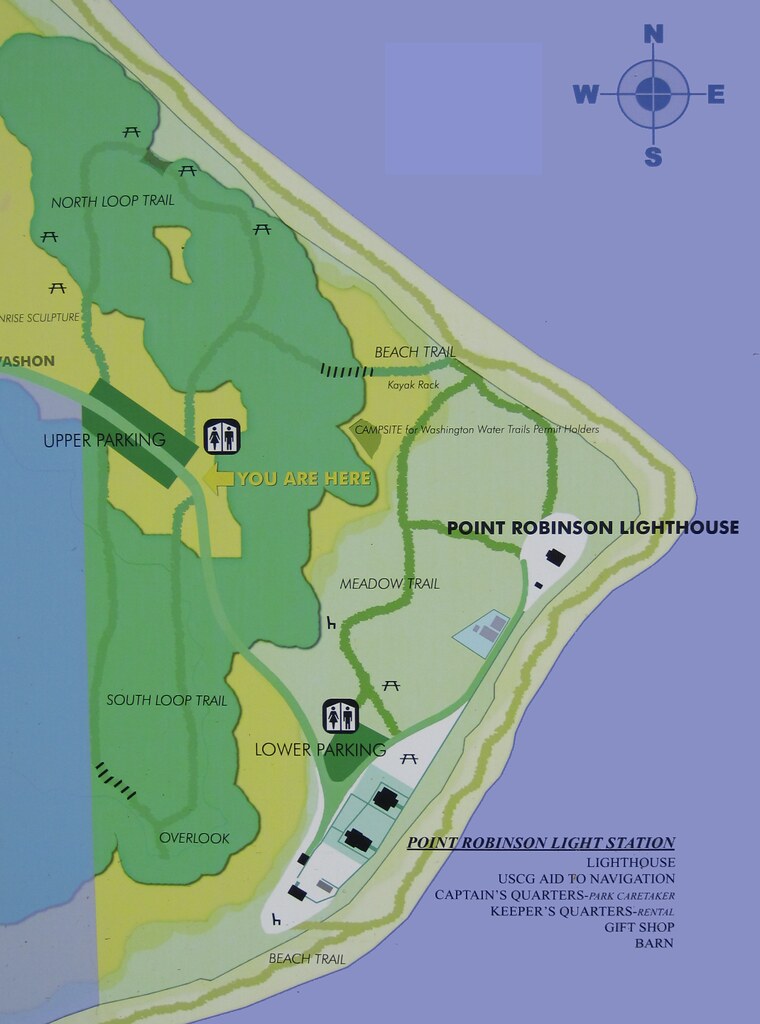
The Point Robinson Lighthouse and the surrounding area is now part of a 10-acre shoreline park and marine conservancy that is managed by the Vashon Park District. The park includes an extensive sandy beach, walking trails in woodland areas, and picnic tables.

Point Robinson Park map (click for larger view)

You might even consider spending the night here. The lighthouse keepers’ quarters are available for rental. Quarters A (pictured below) has three bedrooms, and Quarters B has two bedrooms. Both rentals have full kitchens for cooking and dining. For more info, see Point Robinson Keepers’ Quarters.

Point Robinson keepers' quarters

Here’s a list of other Redmond Library blog postings on days trips in the Seattle area:
The Long and Windy Road: A Visit to the Wild Horse Wind Farm
English Boom Historical Park: A Camano Island Gem
Experience Washington: Your Staycation Travel Guide
Washington's Lighthouses: Point No Point
Padilla Bay Shore Trail: A Path to Nature
Historic Murals: A Walk Along Bothell's Past

Redmond Library Board